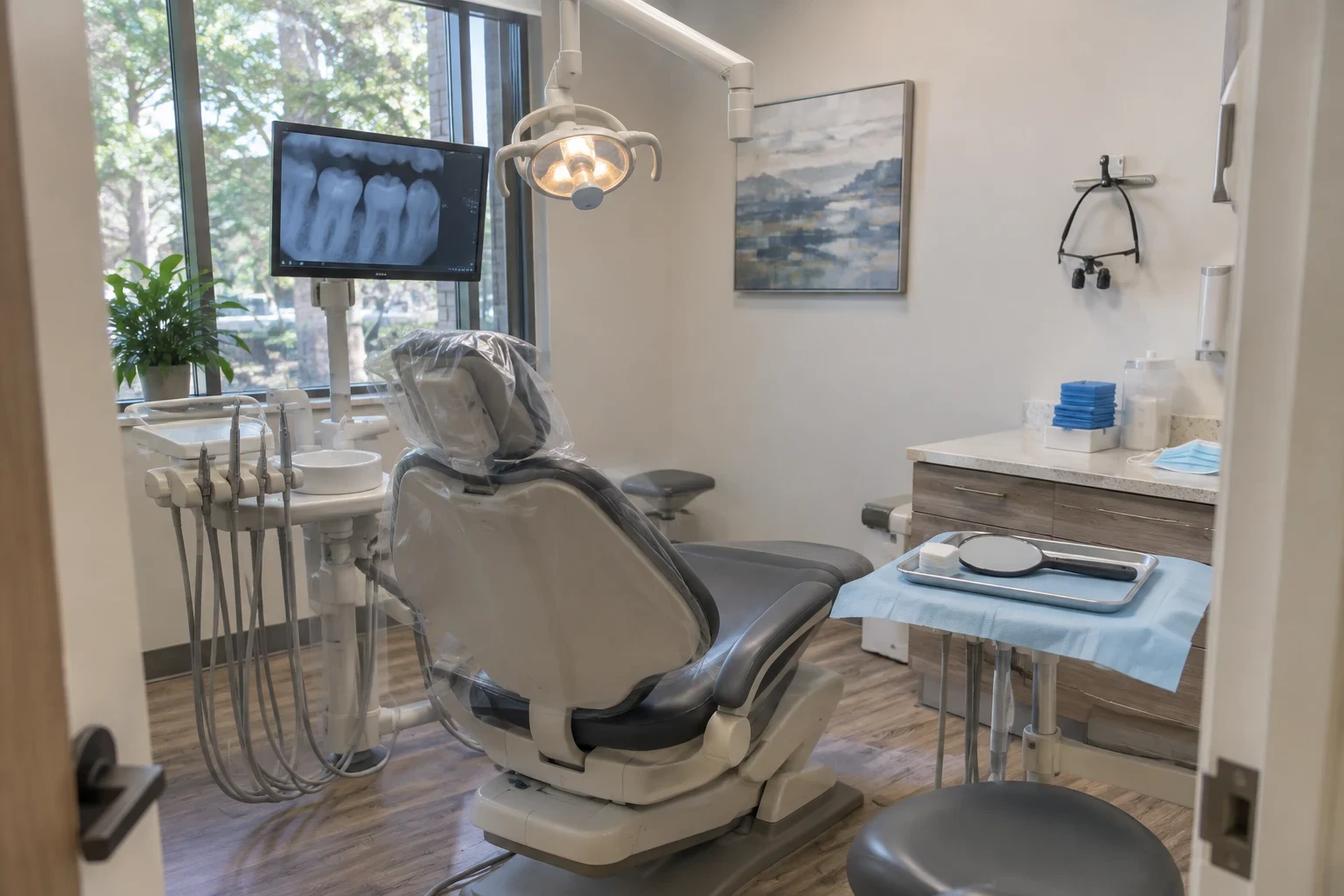
Is It Worth Getting a Tooth Pulled in Hickory Creek?
An extraction can end pain quickly, but the better choice depends on the tooth, what it would take to save it, and what you plan to put in the space afterward.
Is it worth getting a tooth pulled?
Sometimes, yes. Pulling a tooth is worth it when the tooth is cracked below the gumline, badly infected with little support left, or crowding healthy teeth. If the tooth can be saved with a root canal and crown, keeping it is usually better. An exam with X-rays tells you which side you are on. (940) 260-3326
When pulling the tooth is the right call
Some teeth simply cannot be rebuilt in a way that will last. A crack that runs down into the root, decay that has eaten away most of the tooth below the gum, or bone loss from advanced gum disease can leave nothing solid to work with. In those cases, a root canal and crown would be spending time and money on a tooth that is likely to fail anyway.
Removing it ends the source of pain and infection and lets the area heal cleanly. It also gives you a stable starting point for a replacement that can serve you for many years.
- A vertical crack that extends into the root
- Decay so deep there is not enough healthy structure to hold a crown
- Loose teeth from bone loss around the root
- Repeated infection after earlier treatment
- Wisdom teeth that are impacted, partly erupted or pushing on neighbors
- Teeth that need to come out to make room for orthodontic work
When saving the tooth is usually better
A natural tooth has things no replacement fully matches: its own root, the ligament that cushions your bite, and the bone it keeps healthy around it. When the infection is inside the tooth but the outer structure is sound, a root canal followed by a crown often keeps that tooth working for a long time.
Pain alone is not a reason to pull a tooth. A throbbing molar can feel hopeless and still be very treatable. We look at the X-rays with you, show you what we see, and give you a straight answer about which option holds up better for your mouth, not just which one is faster today.
What happens to the space after an extraction
A gap does more than change your smile. Over the months that follow, the jawbone where the root used to sit begins to shrink, and the teeth on either side can tip into the space. The tooth above or below may drift out of its socket because it has nothing to bite against. These changes are slow, which is why they are easy to ignore until chewing or fit becomes a problem.
This is why we talk about the replacement before the extraction, not after. Dental implants replace the root as well as the crown, which helps keep the bone in place. A bridge uses the neighboring teeth for support. Partial or full dentures are an option when several teeth are missing. Wisdom teeth and some back teeth may not need replacing at all, and we will tell you when that is the case.
- Dental implant: a post in the jaw topped with a crown, closest to a natural tooth
- Bridge: a replacement tooth held by crowns on the teeth beside it
- Partial denture: a removable piece that replaces one or more missing teeth
- Full denture: a complete arch for patients losing most or all of their teeth
How the timeline usually runs
Most extractions start with an exam and X-rays, and a CBCT scan if we need a clearer picture of the bone and nearby nerves. A straightforward extraction is often done in a single visit. Surgical extractions, such as impacted wisdom teeth, take longer and may need a separate appointment so you can plan time off.
Healing has its own pace. Most patients feel noticeably better within a few days, while the bone underneath takes a few months to heal and rebuild. If you are heading toward an implant, we map out each stage when we build your treatment plan: extraction, any bone grafting, healing time, implant placement and the final crown. If healing runs slower than expected or a step needs to change, we tell you early and adjust the schedule with you, so you are never left guessing about the next appointment.
Weighing the cost over the long run
An extraction usually costs less on the day than saving the tooth, which is why it can seem like the obvious choice. The fuller picture includes what you will spend to replace the tooth later, or what it may cost to deal with shifting teeth if you leave the gap open. What moves the total is how complex the extraction is, whether bone grafting is needed, and which replacement you choose.
We are in-network with 15+ major PPO dental insurance plans, and we can walk you through what your plan is likely to cover. For patients without insurance, our in-house Membership Plan for uninsured patients is an option. We also offer 0% interest financing for up to 24 months, with no credit score impact to check for preapproval, which can make it easier to choose the treatment that fits rather than the one that is cheapest this week.
More questions about having a tooth pulled
- Does getting a tooth pulled hurt?
- The area is fully numbed before we begin, so most patients feel pressure rather than pain during the extraction. Some soreness for a few days afterward is normal and is usually managed with the aftercare steps and medication we go over with you.
- Can I go back to work the next day?
- After a simple extraction, many patients return to desk work the next day. After a surgical extraction, plan on a day or two of rest and soft foods, and avoid heavy lifting or hard exercise until we say it is fine.
- Can an implant go in the same visit as the extraction?
- In some cases, yes, when the bone is healthy and there is no active infection. Often the site needs to heal or receive a bone graft first, and your scan will show which approach fits.
- What should I avoid right after an extraction?
- Skip straws, smoking and vigorous rinsing for the first few days, since they can dislodge the blood clot that protects the socket. Stick to soft, cool foods and chew on the other side until the area settles.
Get a clear answer before the tooth comes out
Give us a call and we will set up an appointment to examine the tooth, take the X-rays we need, and lay out both paths: saving it, or removing it and what would replace it. You leave with a realistic timeline for each stage, so you can plan work and family around it.