ServicesRoot Canals
Root Canals in Hickory Creek
A root canal removes infected or inflamed tissue from inside a tooth so you can keep it. We tell you how long each visit will take, when the crown fits in and what happens next, so you can plan work and family around your care.
When a Root Canal Is the Right Call
Inside every tooth is a small chamber of nerve and blood vessels called the pulp. Deep decay, a crack or an old filling that has leaked can let bacteria reach it. Once the pulp is inflamed or infected, it does not heal on its own, and the pain or swelling usually returns even after it seems to settle.
A root canal cleans out that chamber, seals it and keeps the natural root in your jaw. Keeping your own tooth holds neighboring teeth in place and protects the bone around it. When a tooth is too broken to save, we say so plainly and walk you through extractions or dental implants instead.
We schedule realistically. Most root canals take one visit, some need two, and the crown comes after. You hear that sequence at the start, not halfway through.
What Your Root Canal Treatment Includes
- Exam and digital X-rays
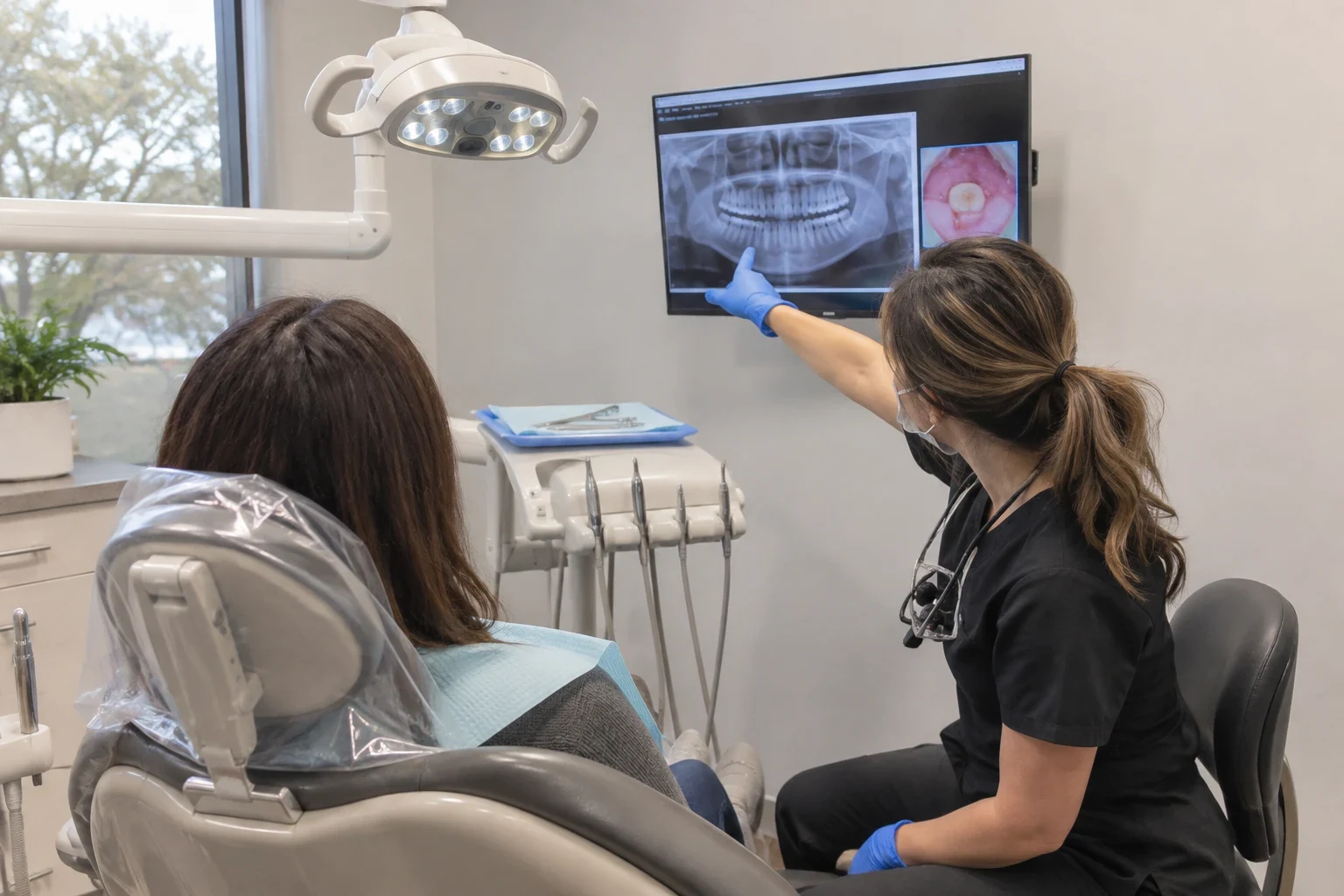
- We look at the tooth, test how it responds to cold and pressure, and take digital X-rays. A CBCT scan is added if the root shape or infection needs a closer three-dimensional view.
- Thorough numbing
- We numb the tooth and surrounding gum and check that it is fully numb before we begin. If you feel anything, tell us and we stop and add more.
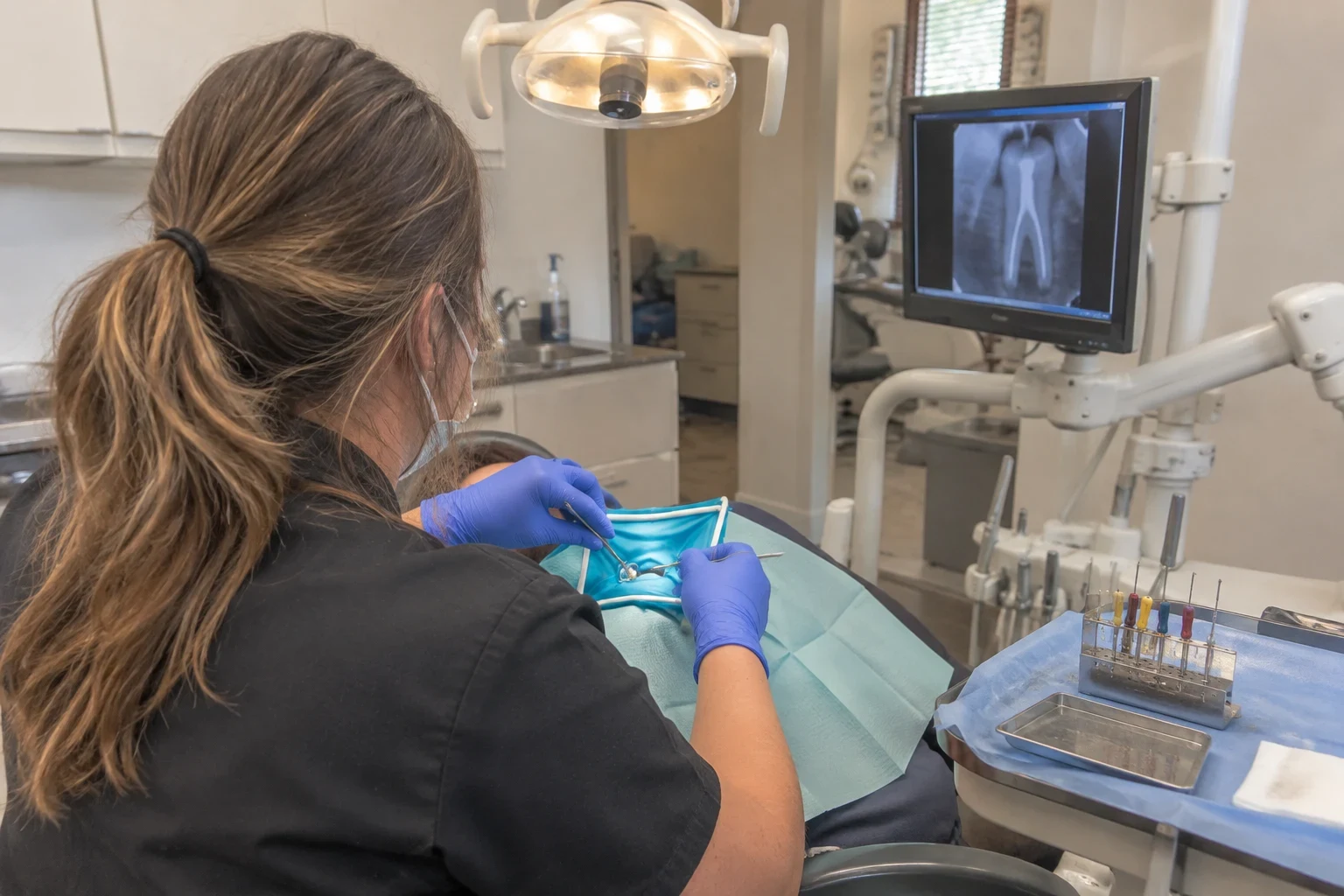
- Cleaning and shaping the canals
- Small files remove the infected pulp and shape each canal, with rinses that disinfect along the way. A thin rubber shield keeps the tooth dry and clean while we work.
- Sealing the roots
- The canals are filled with gutta-percha, a rubber-like material, and a sealer that closes them against bacteria. A temporary filling protects the top until the permanent restoration.
- A plan for the crown
- Back teeth that have had a root canal become more brittle, so most need a crown. We book that visit before you leave, so the tooth is not left waiting on a temporary filling.
Signs a Tooth May Need a Root Canal
Lingering sensitivity
Hot or cold that hurts for more than a few seconds after the drink is gone often points to an inflamed nerve.
Pain when you chew
A sharp or dull ache when you bite down can mean infection has reached the tissue around the root tip.
A pimple on the gum
A small bump near the tooth that drains or comes and goes is often a sign of an abscess draining through the gum.
A darkening tooth
A tooth that turns gray or darker than its neighbors may have a damaged nerve, sometimes years after an injury.
Swelling in the gum or face
Puffiness near a sore tooth means infection is spreading. Call us so we can see you and plan treatment.
What Moves the Cost of a Root Canal
You receive a written treatment plan before work begins, with the root canal and the crown listed separately. The $25 Focused Evaluation (comprehensive exam, digital X-rays, CBCT scan if needed, treatment planning & consultation) is a simple way to get that plan. We are in-network with 15+ major PPO dental insurance plans and offer an In-house Membership Plan for uninsured patients.
Which tooth
Front teeth usually have one canal, while molars have three or more. More canals mean more time and a higher fee.
First treatment or retreatment
Redoing an older root canal means removing the original filling material first, which adds time and complexity.
Crown and buildup
Most treated back teeth need a core buildup and a crown. These are separate line items on your plan.
Your coverage
PPO plans often cover part of root canal treatment and crowns. We check your benefits ahead of time, and 0% interest financing for up to 24 months, no credit score impact to check for preapproval, can spread out the rest.
How Your Root Canal Visit Runs
- 1
Evaluation and a clear timeline
We confirm the diagnosis, explain whether one or two visits are likely and tell you about how long you will be in the chair. Molars with three or four canals take longer than front teeth, and we plan for that.
- 2
Treatment day
After numbing, we clean, disinfect and seal the canals, then place a temporary filling. You can usually drive yourself and return to normal plans later that day, though the area stays numb for a few hours.
- 3
If plans change
Sometimes a canal is curved or the infection needs medicine placed inside the tooth between visits. If that happens, we tell you during the appointment and book the next step before you leave.
- 4
Crown and follow-up
A few weeks later we prepare the tooth for its crown. We check the bite and take a follow-up X-ray to confirm the area is healing.
Root Canal Questions
Does a root canal hurt?
The treatment itself should feel much like a filling once the tooth is numb. Most of the pain people associate with root canals comes from the infection beforehand. Expect some tenderness for a few days afterward, which usually responds to over-the-counter pain relievers.
How many visits will it take?
Most root canals are done in one visit, followed by a separate crown visit. Some teeth need a second treatment visit if the canals are complex or the infection is severe. We tell you which is likely at your evaluation.
Do I really need a crown afterward?
For molars and premolars, almost always. A treated tooth is drier and more brittle, and chewing forces can crack it without a crown. Front teeth sometimes do well with a filling alone, and we will tell you which applies.
Should I just have the tooth pulled instead?
Keeping your natural tooth is usually the better choice when it can be saved. Removing it leaves a gap that typically needs dental implants or a bridge to prevent shifting. If the tooth is cracked below the gum or too damaged, we will recommend an extraction honestly.
Can I go back to work the same day?
Most patients do. Your lip and cheek may stay numb for a few hours, so plan meals accordingly and avoid chewing on that side until the crown is placed.
Save the Tooth on a Schedule You Can Count On
Tell us which tooth is bothering you and how long it has hurt. We will find an appointment time and explain what that visit includes.