
ServicesExtractions
Tooth Extractions in Hickory Creek
When a tooth can no longer be saved, we remove it gently and tell you plainly how the visit will go, how long healing takes and what comes next. You leave with written aftercare and a plan for the space, not a guess.
When removing a tooth is the right call
We look at saving a tooth first. A root canal and crown can rescue many teeth that hurt badly. Removal makes sense when a tooth is split below the gumline, decayed past the point a crown can hold, loose from advanced gum disease, or crowding teeth that need room.
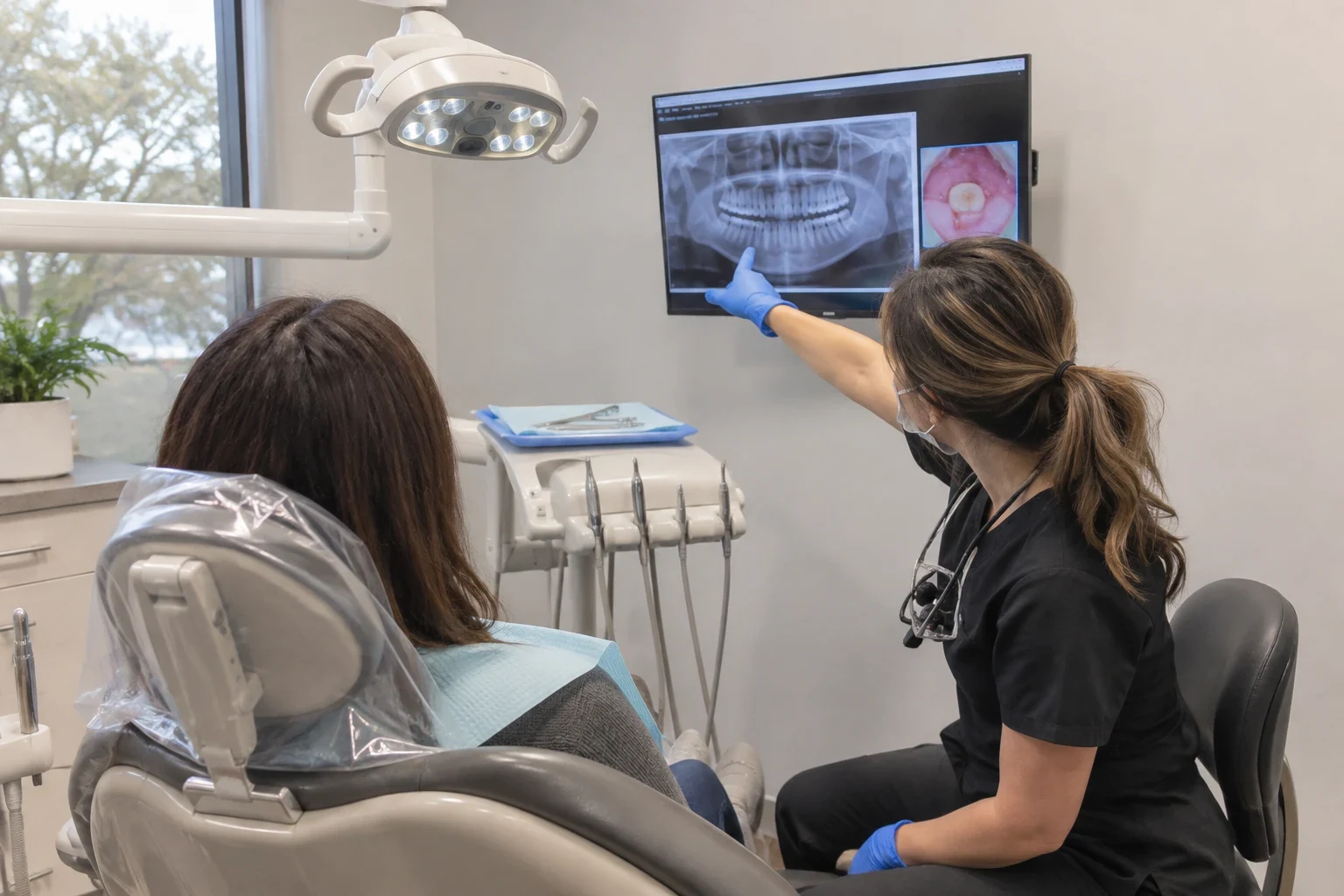
Before anything is removed, we take digital X-rays and, when the roots sit close to a nerve or sinus, a CBCT scan. That picture tells us whether this is a simple extraction or a surgical one, and it lets us give you an honest estimate of chair time and recovery before you commit.
We also talk about the gap. Planning now for dental implants, a bridge or a partial denture often changes how we handle the socket on the day.
What your extraction includes
- Imaging and diagnosis
- Digital X-rays, plus a 3D CBCT scan if root shape or position calls for it. We show you the images and explain what they mean.
- Thorough numbing
- We use local anesthetic and check that the area is fully numb before we begin. You will feel pressure, not sharp pain, and you can ask us to pause at any point.
- Simple or surgical removal
- Teeth that are fully visible are usually loosened and lifted out whole. Broken or deeply rooted teeth may be sectioned into pieces so they come out with less force on the surrounding bone.
- Socket care for future implants
- If dental implants are part of your plan, we may place bone graft material in the socket to help preserve its shape while it heals.
- Written aftercare
- You go home with gauze, clear instructions for the first day after removal and a list of what is normal and what is not during healing.
Signs a tooth may need to come out
A crack that runs below the gum
Pain on biting that comes and goes can mean a vertical fracture. When the split reaches the root, the tooth usually cannot be repaired.
Decay that has hollowed the tooth
If little healthy structure is left above the gum, there may be nothing for a filling or crown to hold onto.
A tooth that moves
Looseness from gum disease means the bone supporting it has been lost. Past a certain point, keeping the tooth only risks the neighbors.
Swelling that keeps returning
A recurring bump on the gum or a bad taste can signal an infection. Sometimes a root canal clears it, and sometimes removal is the safer choice.
A failed earlier treatment
A tooth that has had a root canal and still aches, or has broken again under a crown, deserves a careful second look.
How the visit runs
- 1
Evaluation and timeline
We examine the tooth, review your health history and medications, and tell you how long the appointment should take. If it can be done at that visit, we will say so. If it needs its own appointment, we book a time that works around your week.
- 2
Numbing and removal
Once the area is numb, we gently widen the socket and lift the tooth out. A simple extraction is often brief, while a surgical one takes longer. If something takes more time than expected, we tell you while you are still in the chair.
- 3
Closing and gauze
We clean the socket, add graft material or a few stitches when needed, and have you bite on gauze to let a clot form. That clot protects the bone underneath.
- 4
Healing check
Most patients feel the worst of the soreness in the first two to three days. We schedule a follow-up when stitches or grafting are involved, and if your plans shift, we move it with you rather than letting it slide.
What affects the cost of an extraction
We give you an estimate after imaging, so you know what the visit involves before we begin. A single straightforward extraction costs less than a surgical one, and anything added for future dental implants is listed separately. If a recommendation changes once we are underway, we explain why before going further.
- Simple versus surgical
- A tooth that comes out whole takes less time than one that is broken at the gumline or has curved roots needing to be sectioned.
- Number of teeth
- Removing several teeth in one visit is often more efficient than spreading them out, depending on your health and comfort.
- Grafting and stitches
- Bone graft material to preserve the socket adds to the cost but can make an implant simpler later.
- Imaging needed
- Standard X-rays cover most teeth. A CBCT scan is added only when roots sit near a nerve or sinus.
- Insurance and payment
- We are in-network with 15+ major PPO dental insurance plans. Uninsured patients can use our in-house Membership Plan, and 0% interest financing for up to 24 months is available, with no credit score impact to check for preapproval.
Questions about extractions
Something not covered here? (940) 260-3326
Will it hurt?
The area is numbed before we start, so most patients feel pressure rather than pain. Afterward, expect soreness for a few days. Over-the-counter pain relief usually handles it, and we will tell you what fits your health history.
How long until I can eat normally?
Stick to soft, cool foods for the first day or two and chew on the other side. Most people return to their usual meals within a week. Avoid straws, spitting and smoking early on, since suction can dislodge the clot.
What is dry socket?
It happens when the blood clot comes loose and leaves the bone exposed, usually two to four days after removal. The pain is sharp and can reach the ear. If that happens, contact us and we will see you to place a soothing dressing.
Do I need to replace the tooth?
Not always, especially for back molars with no opposing tooth. But gaps can let neighboring teeth drift and the bone shrink over time. We will walk you through dental implants, bridges and dentures so you can decide on your own timeline.
Can I have the tooth out at my first visit?
Often, yes, if the tooth is straightforward and your schedule allows the time. Our $25 Focused Evaluation includes a comprehensive exam, digital X-rays, a CBCT scan if needed, and treatment planning and consultation, so we can tell you right then what the removal involves.
Get a clear plan for a troubled tooth
Tell us what you are feeling and which days are open for you. We will find an appointment that fits and let you know how long to set aside, so the visit slots into your week, even if you are driving in from Lake Dallas.