ServicesDental Implants
Dental Implants in Hickory Creek
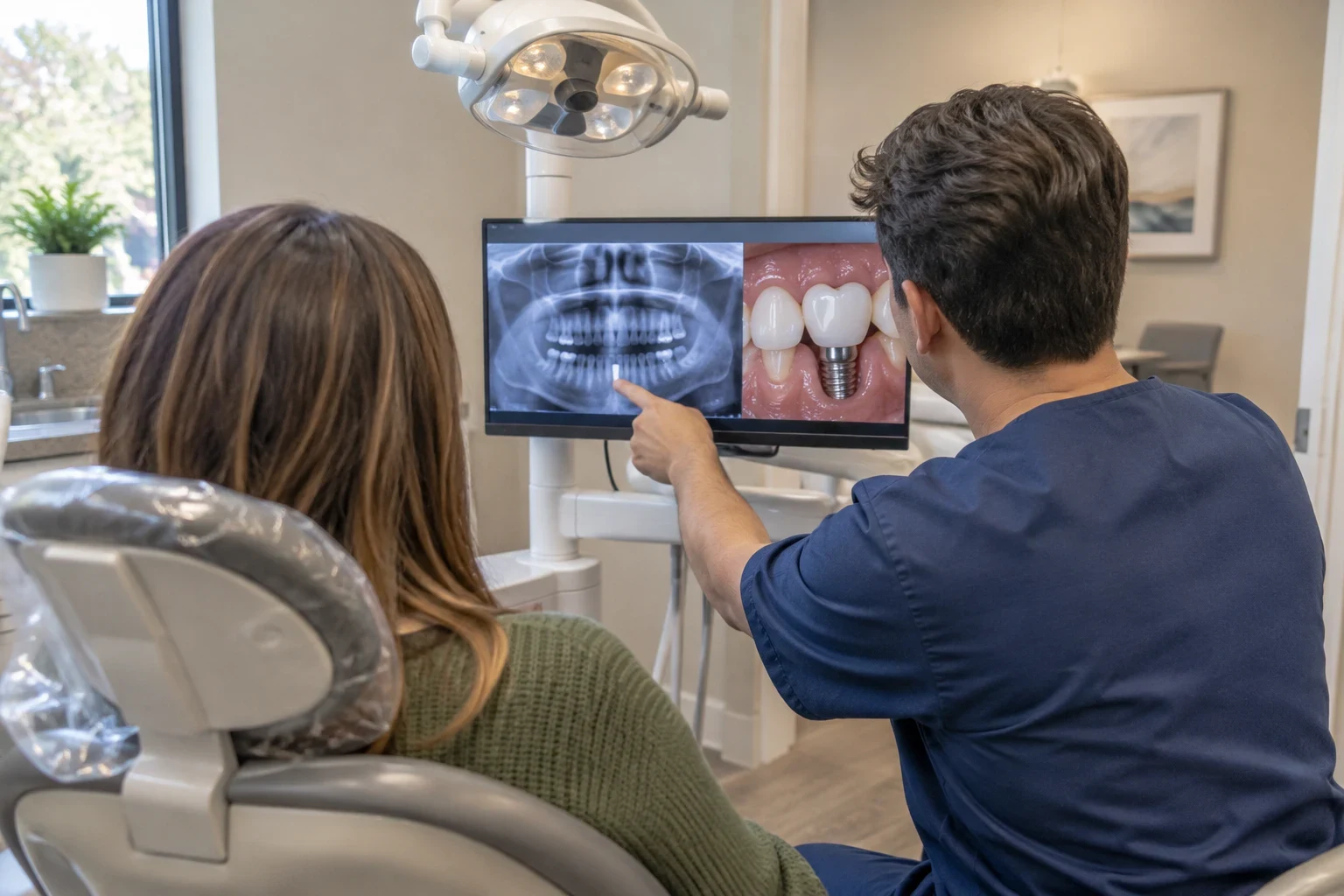
A dental implant replaces the root of a missing tooth and supports a crown that looks and bites like your own. We plan each stage around a 3D scan and give you a realistic timeline from the first visit, so you know what comes next and when.
A replacement tooth built to stay put
An implant is a small titanium post placed in the jawbone where a tooth used to be. Over the following months the bone grows tightly around it. Once it is stable, we attach a connector called an abutment and a custom crown shaped and shaded to sit naturally beside your other teeth.
Implants are often the right call when a tooth is gone or can no longer be saved, and you want something that does not move, does not rely on the teeth next to it, and helps keep the jawbone from shrinking over time. They also anchor bridges and dentures for patients missing several teeth.
The honest part is the calendar. Implant treatment happens in stages with healing in between, and we lay out that timeline at the start. If healing takes longer than expected or a step needs to move, we tell you why and reset the plan with you.
What your implant treatment includes
Evaluation and CBCT scan
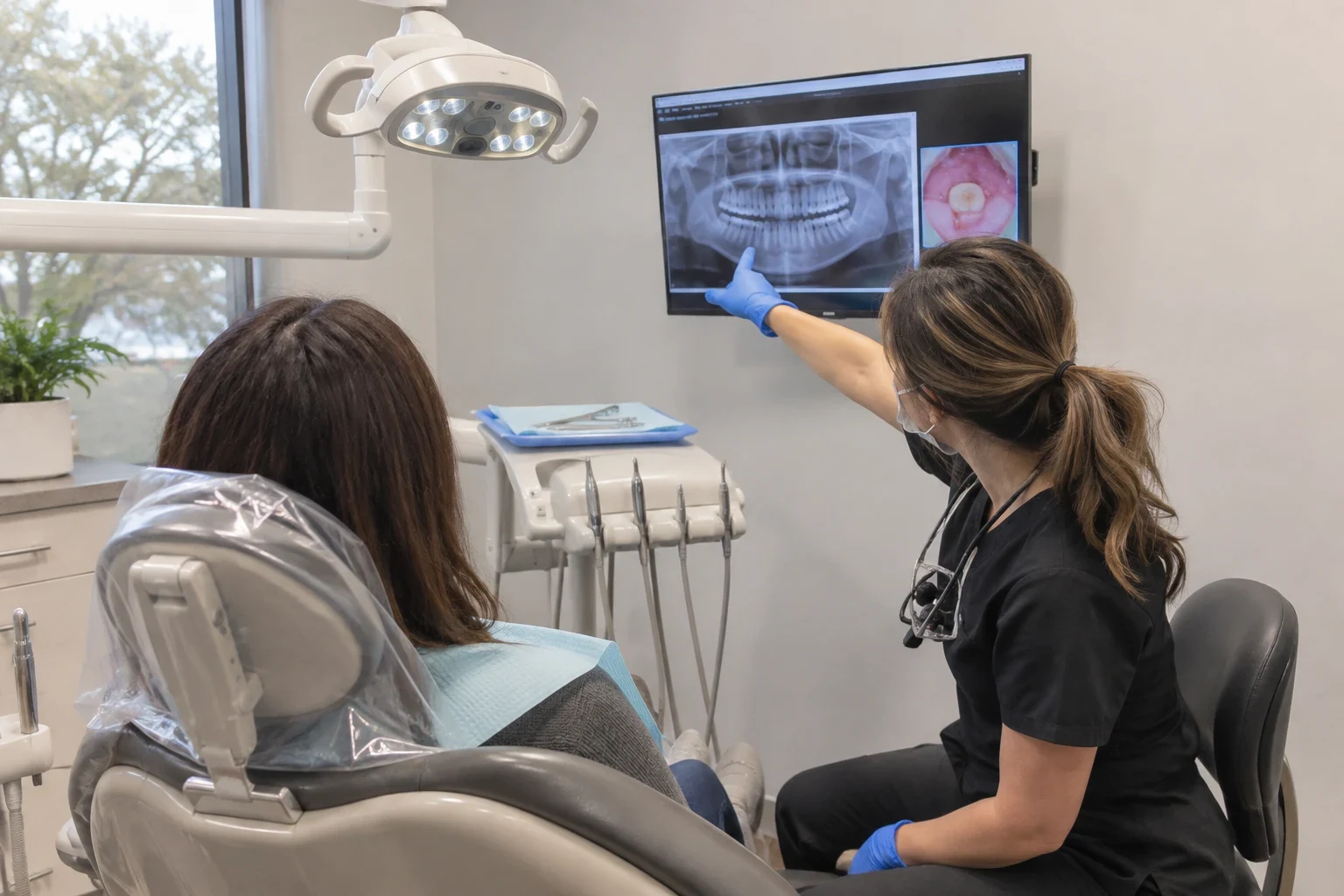
We start with an exam, digital X-rays and a 3D CBCT scan when needed. The scan shows bone height, width and the position of nerves and sinuses, which tells us where an implant can safely go.
A written treatment plan
You leave with each stage listed in order, what happens at each visit, and the typical healing time between them. Costs are explained line by line before any work starts.
Extraction and bone grafting when needed
If a failing tooth is still in place, we remove it gently. Where the bone has thinned, a graft rebuilds the site so the implant has something solid to hold.
Implant placement
The post is placed under local anesthetic. Most patients describe it as pressure rather than pain, and many return to normal routines the next day.
Custom abutment and crown
Once the bone has fused firmly around the post, we take impressions and fit a crown matched to the color and shape of your neighboring teeth. We check your bite carefully so it wears evenly.
Signs an implant may be right for you
- A gap from a lost tooth
- Even one missing tooth lets the teeth beside it drift and tilt. Filling the space early keeps your bite from shifting.
- A tooth that cannot be saved
- Deep fractures below the gumline or decay that has destroyed most of the tooth often mean replacement is the better long-term answer. We will tell you plainly if a root canal could save it instead.
- A loose or uncomfortable denture
- Two to four implants can hold a denture firmly in place, so it stops slipping when you eat or speak.
- A bridge that keeps failing
- If an old bridge has decay under it or the support teeth are weakening, an implant can stand on its own without relying on them.
- Avoiding foods you used to enjoy
- Chewing on one side or skipping crunchy foods is a sign the gap is changing how you eat.
How the implant process runs, step by step
- 1
First visit and scan
We examine the area, take the scan and talk through your options, including whether an implant, bridge or denture suits you best. You get a timeline before you leave.
- 2
Preparing the site
If an extraction or graft is needed, it happens first. Some grafts heal for a few months before the implant goes in; we schedule that wait into your plan from the start.
- 3
Placing the implant
The visit usually takes one to two hours for a single implant. We give you written aftercare and a check-in appointment so you are not left guessing.
- 4
Healing and check-ins
The bone typically bonds to the implant over three to six months. We see you along the way, and if anything slows healing we let you know and adjust the dates.
- 5
Fitting the final crown
Once the implant is stable, we fit the abutment and crown, fine-tune the bite and show you how to clean around it.
What affects the cost of dental implants
No two implant cases are priced the same, because the work underneath the crown varies a great deal. After your evaluation we give you a clear, itemized estimate. We accept insurance and are in-network with 15+ major PPO dental insurance plans, and we offer 0% interest financing for up to 24 months, no credit score impact to check for preapproval.
- Number of implants
- One implant for a single tooth costs less than several implants supporting a bridge or a full arch.
- Bone and gum condition
- Teeth that have been missing for years often leave thinner bone. Grafting adds a step and a cost, but it gives the implant a stable base.
- Extractions first
- Removing a damaged tooth before the implant is a separate procedure and is listed on its own line in your estimate.
- Crown material
- Zirconia and porcelain crowns differ in strength and how they handle light. We explain the trade-off for your bite and the tooth's position.
- Insurance and membership
- PPO coverage for implants varies by plan. For patients without insurance, our in-house Membership Plan for uninsured patients can lower the cost of care.
Dental implant questions
- How long does the whole implant process take?
- For most patients, from placement to final crown is roughly three to six months. Add a few months if a bone graft needs to heal first. We give you an estimated schedule at the first visit and update it if anything changes.
- Does getting an implant hurt?
- Placement is done under local anesthetic, so you feel pressure but not sharp pain. Afterward, most people manage soreness for a few days with over-the-counter pain relievers. We go over aftercare in detail before you leave.
- Am I a good candidate if my tooth has been missing for years?
- Often yes. Bone can shrink after a tooth is lost, but the CBCT scan shows exactly how much remains, and grafting can rebuild it in many cases. Smoking and uncontrolled diabetes can slow healing, so we discuss those honestly.
- Will my insurance cover implants?
- It depends on your plan. Some PPO plans cover part of the implant or the crown, others cover none of it. We check your benefits and show you what applies before treatment, so the numbers are clear up front.
- Should I choose implants or dentures?
- Implants feel and work most like natural teeth but take longer and cost more per tooth. Dentures are quicker and less expensive, and implants can be added later to stabilize them. We walk through both on our Dentures page and at your evaluation.
Start with a clear plan and a real timeline
Your first step is a $25 focused evaluation with a comprehensive exam, digital X-rays, a CBCT scan if needed, treatment planning and consultation. Patients come to us from Lake Dallas, Corinth, Lewisville and nearby towns.