ServicesWisdom Teeth Removal
Wisdom Teeth Removal in Hickory Creek
We remove wisdom teeth that are crowding, trapped or sore, and we plan the visit around your calendar. Before anything is booked, you will know how long the appointment runs, what recovery looks like and which days to keep light.
When wisdom teeth should come out
Third molars arrive last, usually in the late teens or twenties, and many jaws simply do not have room for them. Some come in straight and cause no trouble. Others erupt halfway, grow in at an angle or stay buried in bone, where they trap food, irritate the gum and press on the molar in front.
Not every wisdom tooth needs to go. We look at position, root shape and how close each tooth sits to the nerve, then give you a straight answer: remove now, watch and recheck, or leave alone. If removal makes sense, we set a date with recovery in mind, so a sore jaw does not land on a work deadline, a trip or the first week of a semester.
What your wisdom teeth visit includes
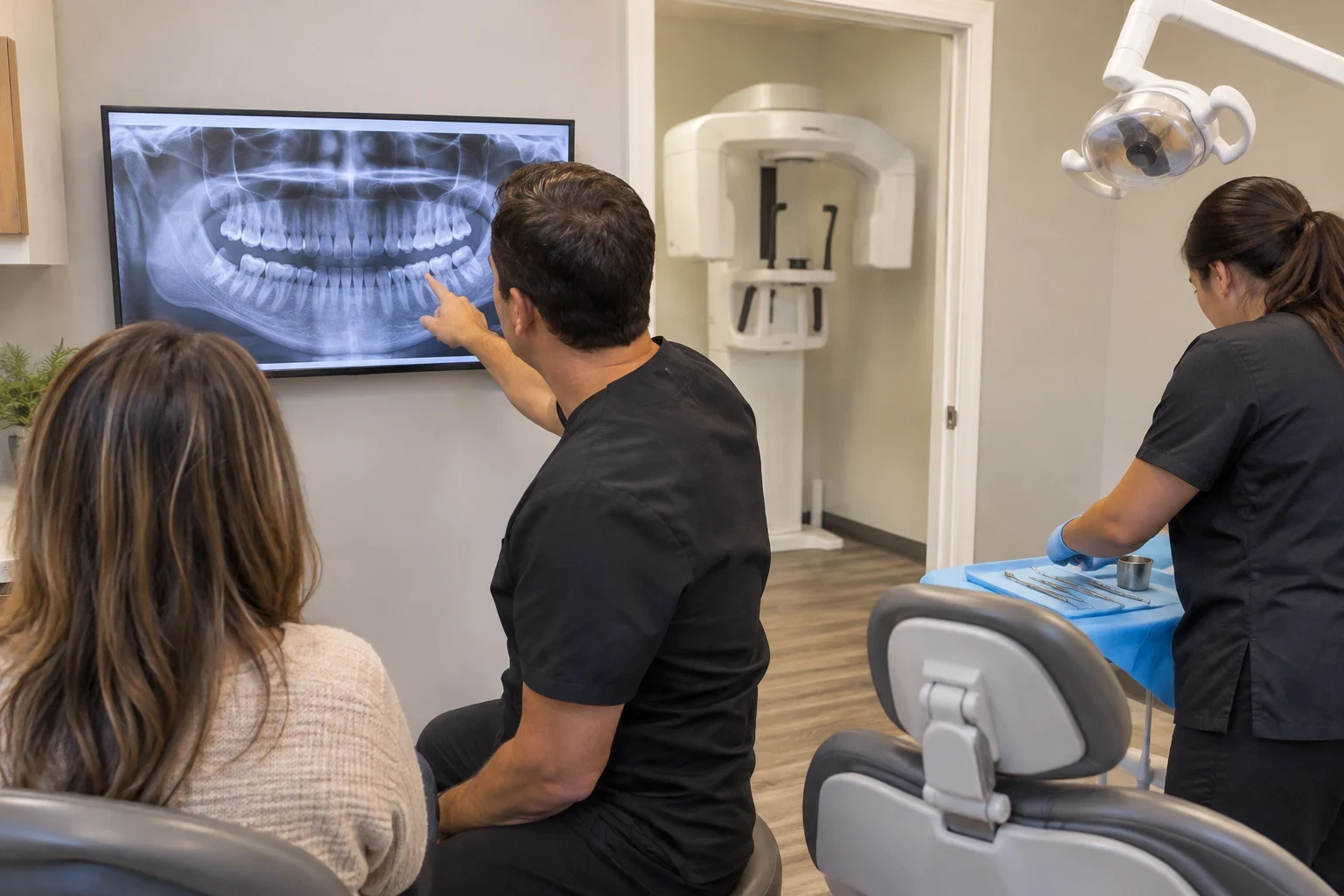
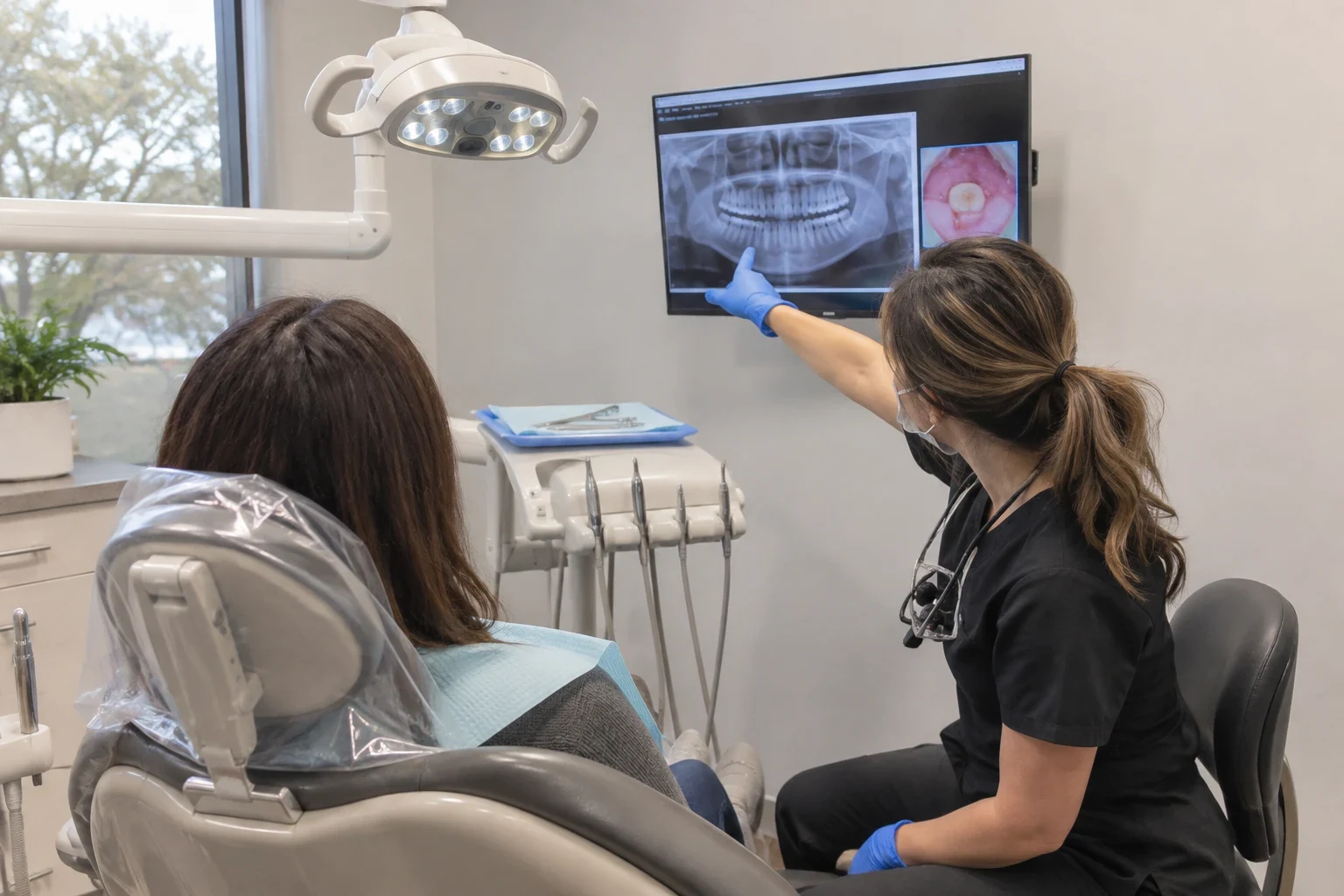
Digital X-rays and a CBCT scan if needed
A standard X-ray shows the tooth. A 3D CBCT scan shows how its roots sit against the nerve and sinus, which tells us how involved the removal will be before the day arrives.
A written treatment plan
You get the plan in plain language: which teeth, how many visits, how long each one runs and the full cost. If four teeth can come out together, we say so. If splitting them across two visits is gentler for you, we say that too.
Thorough numbing and gentle care
We numb the area fully and check it before starting. Impacted teeth are often sectioned into smaller pieces so they lift out with less pressure on the surrounding bone.
Aftercare instructions you can keep
You leave with printed instructions for gauze, swelling, food and rinsing, plus a clear list of what is normal on day two and what is worth a phone call.
A follow-up check
For surgical removals we book a short follow-up to look at healing, so you are not left guessing whether a socket is closing the way it should.
Signs your wisdom teeth need attention
- Pain or pressure at the back of the jaw
- A dull ache behind the last molar, sometimes spreading toward the ear, often means a tooth is pushing against bone or its neighbor.
- Swollen or bleeding gum over a partial tooth
- A flap of gum over a half-erupted tooth traps food and bacteria. Repeated swelling there tends to come back until the tooth is out.
- Bad taste or breath that brushing does not fix
- Debris caught under that gum flap breaks down where a toothbrush cannot reach.
- Trouble opening wide
- Stiffness when you yawn or bite into a sandwich can come from inflamed tissue around a lower wisdom tooth.
- Decay on the molar in front
- An angled wisdom tooth leaves a gap that is almost impossible to clean, and the healthy second molar beside it is often the one that suffers.
How the process runs, start to finish
- 1
Evaluation and scan
We examine your mouth, take digital X-rays and add a CBCT scan if the roots need a closer look. Then we talk through the options at the same visit.
- 2
Picking the right date
We book the removal for a day that leaves you two or three quiet days after. You will know your arrival time and roughly how long you will be in the chair, usually under an hour for straightforward teeth and longer for impacted ones.
- 3
The removal
After numbing, we remove each tooth, place stitches where needed and pack the sites with gauze. Plan on having someone drive you if you feel unsteady afterward.
- 4
Recovery and check-in
Most swelling peaks around day two or three and eases within the week. If our schedule ever has to shift before your visit, we phone you directly and offer the nearest workable time.
What affects the cost of wisdom teeth removal
The price depends far more on how each tooth sits than on how many there are. A tooth that has fully erupted is a simple extraction, while one buried in bone takes more time and care. You get the full figure in your written plan before any work begins.
- Erupted or impacted
- Fully erupted teeth come out much like any other extraction. Partly or fully bony impactions need the gum opened and the tooth sectioned, which adds chair time.
- Number of teeth
- Removing two or four teeth in one sitting usually costs less overall than separate visits, though we will split them if that suits your recovery better.
- Imaging needs
- Some cases are clear on a standard X-ray. Teeth close to the nerve call for a CBCT scan first.
- Insurance and payment
- We are in-network with 15+ major PPO dental insurance plans, offer an in-house Membership Plan for uninsured patients, and have 0% interest financing for up to 24 months, with no credit score impact to check for preapproval.
Wisdom teeth questions patients ask
- How long will I need off work or school?
- Most patients rest for two or three days and return to desk work or class after that. Lower impacted teeth can take a little longer. We give you a realistic estimate for your case when we book, so you can arrange time off ahead.
- Do all four have to come out at once?
- No. Removing them together means one recovery, which many patients prefer. If only one or two are causing problems, or you would rather heal one side at a time, we can plan it that way.
- Will I be awake during the removal?
- Yes. We use local anesthetic so the area is fully numb, and you will feel pressure but not sharp pain. If you are nervous, tell us when you phone and we will talk through what helps keep you comfortable.
- What does the first visit cost?
- New patients can start with our $25 Focused Evaluation (comprehensive exam, digital X-rays, CBCT scan if needed, treatment planning & consultation). That gives you the scan and a written plan before you commit to anything.
- What if a tooth sits very close to the nerve?
- The CBCT scan shows exactly how close it is. Sometimes that changes the approach, and sometimes the safest choice is to leave the tooth and monitor it. We explain what the scan shows and why we are recommending what we recommend.
Plan your wisdom teeth removal
Start with a focused evaluation and a scan, then pick a removal date that fits your week. Patients come to us from Lake Dallas, Corinth, Lewisville and around Hickory Creek.